

Gel Allergies? Make the Switch to Clean Nail Polish
Gel Allergies? Make the Switch to Clean Nail Polish
Gel manicures have changed the way we do our nails, but for some people, repeated exposure to gel products can eventually lead to an allergic reaction. If gel is suddenly no longer an option, here is what to know about gel allergies and why a return to traditional nail polish may be worth considering.
There was a time when gel polish felt like the answer to everything.
Two weeks of perfect color. No chips. No waiting around for your nails to dry. A glossy manicure that somehow survived everything from washing dishes to answering emails.
And then, for some people, something changes.
The skin around the nails starts itching. The fingertips become red or swollen. The cuticles feel irritated. Sometimes the reaction can even show up away from the nails, on the hands, face or eyelids.
Suddenly, the manicure you have been getting for years is no longer something your skin will tolerate.
This is where gel polish allergies come in. And while not every reaction is an allergy, it is a problem that has received increasing attention as gel, artificial and at-home UV nail systems have become more popular.
Can You Suddenly Become Allergic to Gel Polish?
Yes. And this is one of the most frustrating things about a gel allergy.
You can use gel polish for years without a problem and then suddenly develop a reaction.
Many gel and artificial nail systems contain acrylate or methacrylate ingredients. These ingredients help the product cure and create the durable finish that makes gel manicures so long-lasting.
But repeated exposure can cause some people to become sensitized to these ingredients. Once an allergy has developed, future exposure can trigger another reaction.
So if you have been getting gel manicures for years and suddenly your fingers are itchy, swollen or irritated, it is worth taking the reaction seriously rather than simply assuming you need a different gel brand.
What Does a Gel Polish Allergy Look Like?
A gel allergy can look different from person to person, but common symptoms can include redness, itching, burning, swelling, dry or cracked skin and irritation around the nails.
Some people may also notice a reaction on other areas of the body, including the hands, face, eyelids or neck.
Of course, irritated skin does not automatically mean you have an acrylate allergy. There are other reasons your skin might react to a manicure, from irritation to an infection or another ingredient in a product.
If you think you are having a reaction to gel polish, the best thing to do is speak with a dermatologist or allergist. Patch testing can help determine whether you have an allergy and which ingredients you may need to avoid.
Why Does a Gel Allergy Mean You May Need to Stop Using Gel?
This is the part that can feel especially disappointing.
If you have developed a confirmed allergy to an ingredient used in gel or artificial nail products, continuing to expose yourself to that ingredient can cause the reaction to come back.
That can mean giving up gel manicures altogether.
And for someone who has built their entire nail routine around gel, that can feel like a much bigger change than simply switching nail polish.
But giving up gel does not have to mean giving up having beautiful nails.
So, What Can You Use Instead of Gel Polish?
This is where traditional nail polish starts to look pretty appealing again.
Regular nail polish does not require the UV or LED curing process used for gel. You apply your base coat, color and top coat, then let the manicure dry naturally.
It is a different kind of manicure, of course. It may not last as long as gel and you may need to touch it up or change your color more often.
But there is also something lovely about that.
You can change your color whenever you want. You are not committing to the same manicure for three weeks. You do not need a lamp. And you can build a simple nail ritual around polish, oils and treatments that feels much more like skincare for your hands.
Why Make the Switch to Clean Nail Polish?
The word “clean” has become so common in beauty that it can be easy to forget what we are actually looking for.
For us, clean beauty is about being more thoughtful about the ingredients that go into your everyday products and knowing what you are putting on your nails.
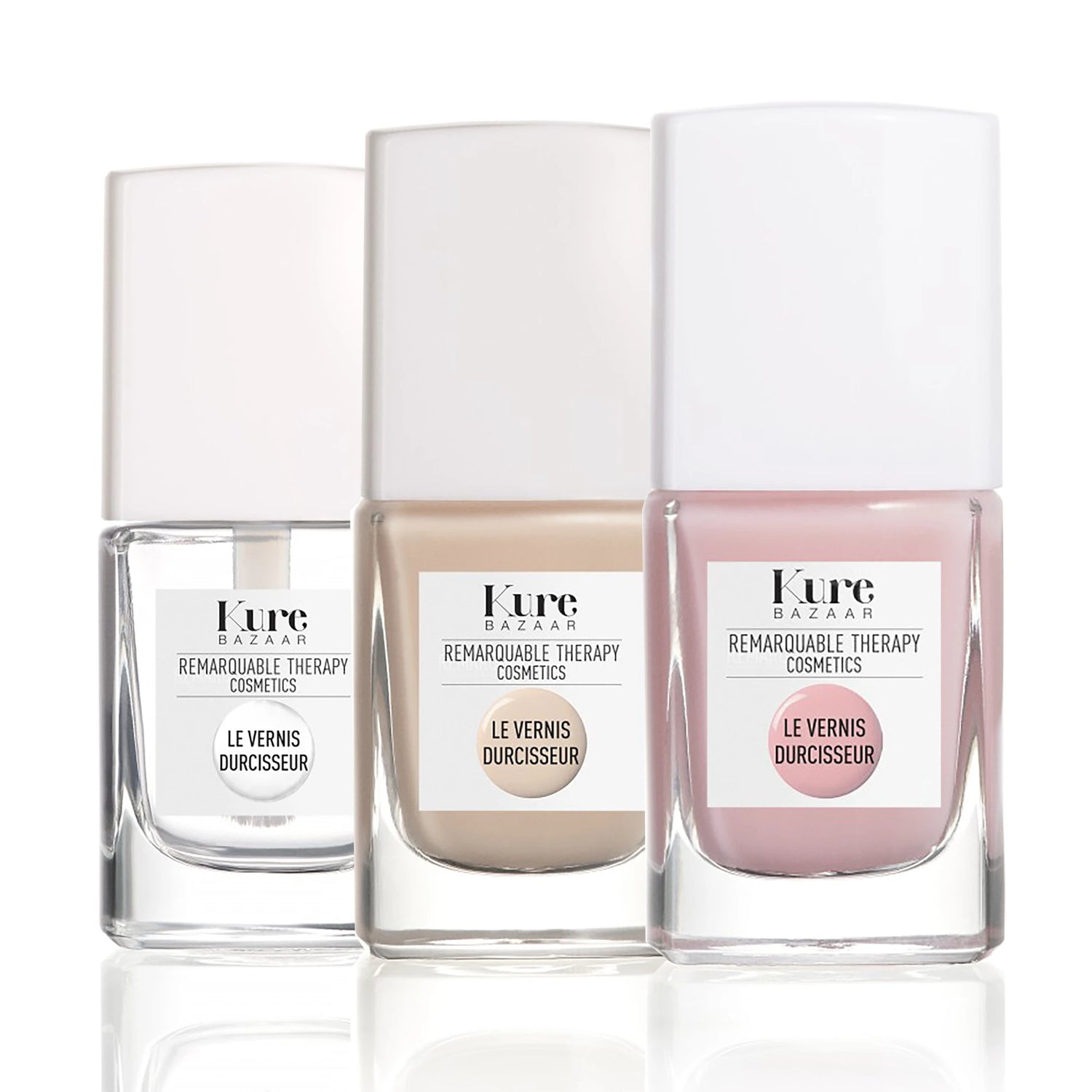
Kure Bazaar's original nail polish formula is up to 90% bio-sourced and is 12-free, using plant-derived ingredients alongside the pigments and ingredients needed to create beautiful, wearable color.
It is not gel. It does not need to be cured under a lamp. And it gives you another option when a traditional gel manicure is no longer part of your routine.
Meet Kure Bazaar Nail Polish
Clean, high-performance color with a formula that is up to 90% bio-sourced and 12-free. No UV lamp required. Just your favorite shade, a good base and top coat, and a little time to dry.

Scandal
A deep, dramatic red that brings a little Parisian attitude to a classic manicure.
View ProductDoes Clean Nail Polish Mean It Is Allergy-Free?
No, and this distinction is important.
“Clean” is not a medical designation, and a clean nail polish should not automatically be considered safe for someone with a diagnosed nail-product allergy.
Different people can be allergic to different ingredients. Even products marketed as HEMA-free can contain other acrylates, which is why reading the ingredient list and knowing your specific allergen matters.
If you have already been diagnosed with an acrylate allergy, speak with your dermatologist about which nail products and ingredients you should avoid before choosing your new polish.
What If I Miss My Gel Manicure?
Honestly, you probably will at first.
Gel has spoiled us a little. There is something satisfying about leaving the salon with completely dry, glossy nails that look perfect for weeks.
But traditional polish has its own charm.
A sheer pink on a Sunday afternoon. A deep red before dinner. A dark chocolate shade in October. A fresh manicure for the weekend that you can remove and replace whenever you feel like it.
You start paying attention to your nails again rather than simply maintaining them.
And with the right base coat, top coat and a little patience while your manicure dries, traditional polish can look incredibly glossy and polished.
Do You Need to Give Up Nail Color If You Have a Gel Allergy?
Not necessarily.
A gel allergy does not mean you have to live with bare nails forever. It means you need to understand what ingredient is causing your reaction and avoid products containing that allergen.
For some people, that may mean moving away from gel and artificial nail systems and returning to traditional polish. The important part is choosing products based on the ingredients you have been advised to avoid, rather than relying on marketing terms alone.
And Do Not Forget Your Nails After Gel
If you are making the switch after years of gel manicures, this is also a good moment to rethink the rest of your nail routine.
Your nails and cuticles can benefit from a little extra moisture, especially if they have been through repeated manicures, removal and exposure to acetone.
Kure Bazaar's Organic Rose Oil is one of our favorite simple additions. The blend of organic oils is designed to moisturize and nourish nails and cuticles, and a few drops massaged around the nail takes less than a minute.
Apply it at night while you are watching television, reading or getting ready for bed. It is one of those tiny habits that is easy to keep because it takes almost no time at all.
A Little Rose for Your Nails
A nourishing blend of organic oils infused with organic rose petals. Use a few drops around the nails and cuticles whenever they need a little extra care.

Organic Rose Oil
A nourishing oil for dry cuticles and nails that need a little extra attention.
View ProductIs Traditional Nail Polish Making a Comeback?
Maybe it never really left.
Gel manicures gave us incredible staying power, but there is something refreshing about returning to a simpler manicure. No lamp. No curing. No three-week commitment to the same shade.
And as more people become aware of gel-related skin reactions and the possibility of developing an allergy after repeated exposure, traditional polish is becoming an appealing alternative for those who have been advised to move away from gel.
It is not about saying that gel is bad for everyone. It is about recognizing that our skin can change, our preferences can change and sometimes our favorite beauty routines simply stop working for us.
The Clean Nail Polish Switch
If gel has suddenly become something your skin can no longer tolerate, you are not alone. And you do not have to give up the fun part of doing your nails.
Start with a few shades you genuinely love. Keep a good base and top coat on hand. Give your nails a little extra oil and moisture. And give yourself a few minutes for your manicure to dry.
It may feel different at first.
But different is not necessarily worse.
Sometimes it is just a return to something simpler.