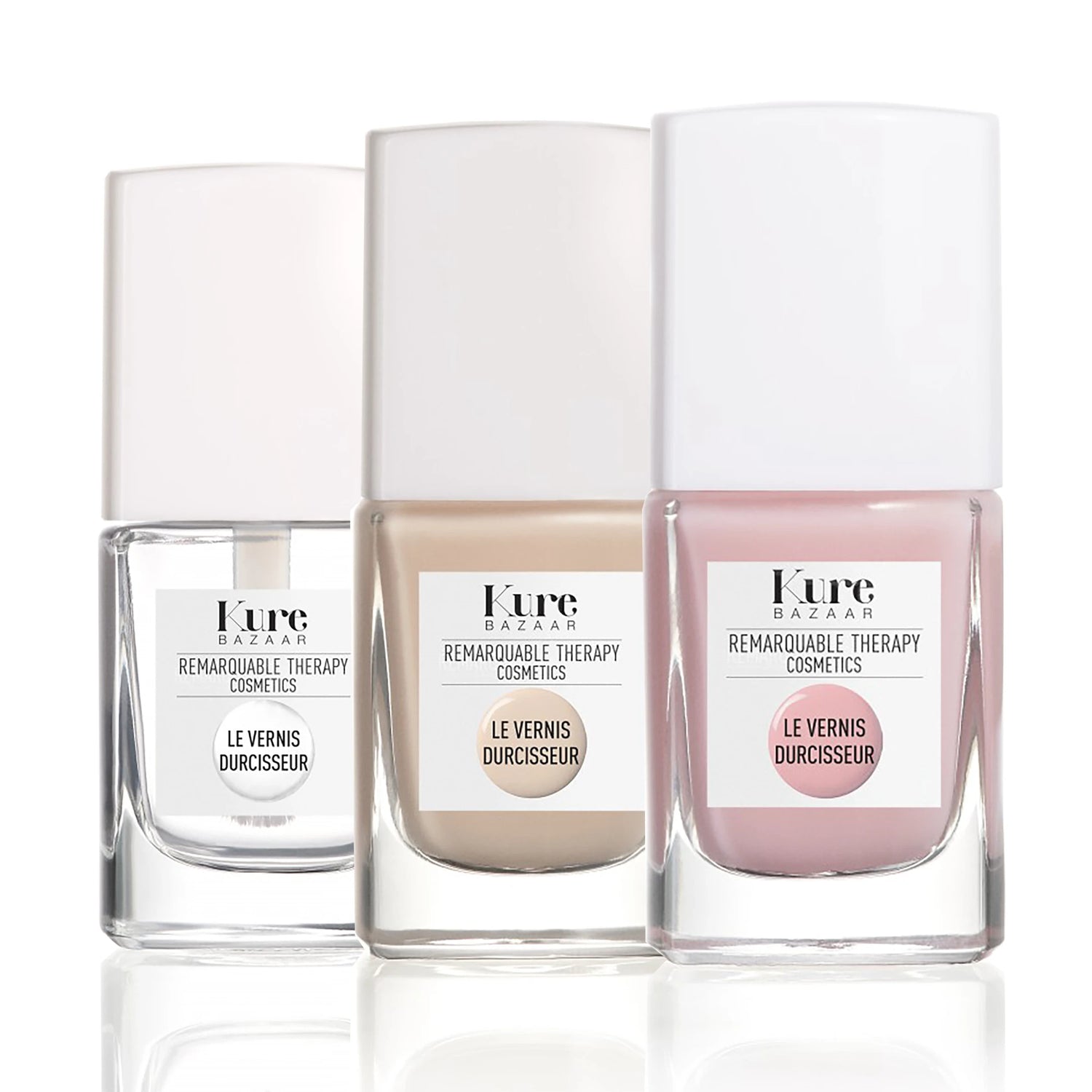

Nail Shapes We Love: How to Shape Your Nails at Home
How to Shape Your Nails at Home
Your nail shape can change the whole look of your manicure before you even apply color.
A soft oval can make nails look longer. A squoval edge can look clean and modern. A rounded shape can make shorter nails feel neat and easy. The trick is choosing a shape your natural nails can actually keep.
Here is how to shape your nails at home using the right file, the right buffing block, and a light hand.
Nail Shapes We Love
Round
Best for shorter nails and easy upkeep.
Oval
Soft, elegant, and naturally lengthening.
Squoval
Square-looking, but softer at the corners.
Almond
Flattering on medium to longer nails.
1. Start with Clean, Dry Nails
Shape your nails when they are clean and dry. Wet nails can feel softer, which makes it harder to get a clean edge.
Remove old polish, wash your hands, let the nails dry fully, then decide on the shape before you start filing.
2. Choose a Shape Your Nails Can Hold
The best nail shape is not always the trendiest one. It is the one your nails can keep without constantly catching or breaking.
If your nails are short, round or squoval is usually easiest. If they are medium length, oval is a beautiful everyday shape. If they are longer and stronger, almond gives a softer, more elongated look.
3. File First, Buff Second
A nail file and a buffing block do different jobs.
Your file shapes the edge. Your buffing block smooths the surface. Think of the file as the shaping step and the buffing block as the finishing step.
File vs. Buffing Block
Nail File
Use it to shape the edge, smooth snags, and refine the length.
Buffing Block
Use it lightly to smooth uneven texture and prep the nail surface.
Best Rule
File the edge. Buff the surface. Do both gently.
4. File Gently in One Direction
Instead of sawing back and forth, use light strokes from the outside edge toward the center. Then repeat on the other side.
Pause often and check the shape. It is much easier to take off a little more than to fix an over-filed nail.
5. Do Not Over-Buff
Buffing can make nails look smoother and more polished, but too much can leave them feeling thin or fragile.
Use a buffing block lightly, especially if your nails already feel weak. The goal is a smooth surface, not a completely erased nail texture.
6. Smooth the Free Edge
The free edge is the part of the nail that catches on hair, sweaters, and bags. After shaping, gently smooth it so there are no tiny snags.
This small step helps your manicure look cleaner and can help prevent little breaks before they start.
The Easy Nail Shaping Routine
- Start with clean, dry nails.
- Choose your shape.
- File from the outside edge toward the center.
- Repeat on the other side.
- Soften sharp corners.
- Buff lightly if the surface looks uneven.
- Smooth the free edge.
Kure Bazaar Essentials for Shaping and Smoothing
The right shape starts with the right tools. A good file helps refine the edge, while a buffing block helps smooth the nail surface so bare nails and polish both look cleaner.

Professional Nail File
A manicure essential for shaping the nail edge and smoothing tiny snags before they turn into breaks.
Shop Nail File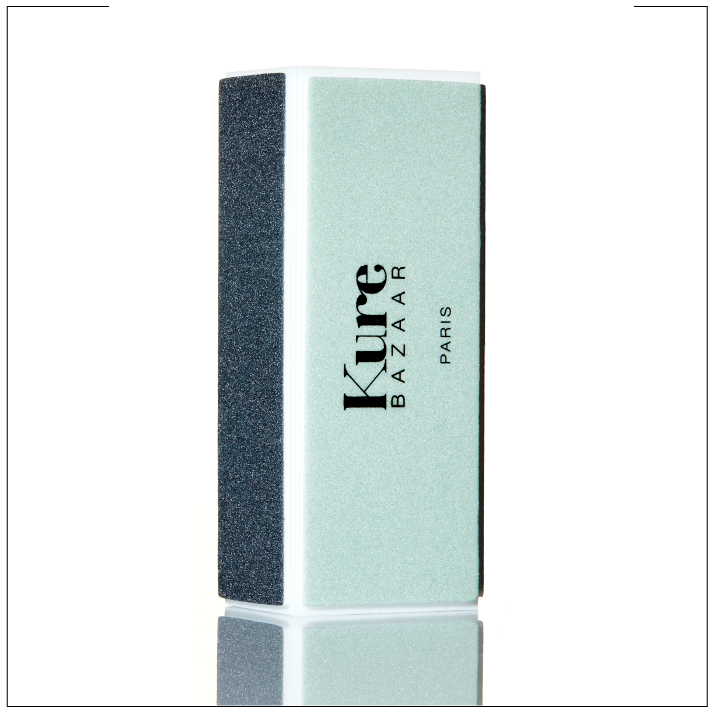
Grey Buffing Block
A multi-use buffing block designed to file, buff, and smooth nails for a cleaner-looking surface.
Shop Buffing Block
Harbor Bridge Buffing Block
A buffing block that helps gently smooth and refine the nail surface before your next manicure.
Shop Buffing BlockThe Takeaway
Learning how to shape your nails is not about copying one perfect shape. It is about working with your natural nails.
Use a nail file to shape the edge. Use a buffing block lightly to smooth the surface. Keep the corners soft, the edge clean, and the routine simple.
That is how nails start to look polished before the color even goes on.
FAQ
How do I shape my nails at home?
Start with clean, dry nails, choose your shape, and file gently from the outside edge toward the center. Smooth the free edge when you finish.
What is the difference between a nail file and a buffing block?
A nail file shapes and smooths the edge of the nail. A buffing block is used more gently on the nail surface to smooth texture before polish.
What nail shape breaks the least?
Softer shapes like round, oval, and squoval are usually easier to maintain because they have fewer sharp corners to catch and break.
Should I buff my nails every time I do a manicure?
No. Buff lightly only when the nail surface needs smoothing. Over-buffing can make nails feel thinner or more fragile.